Assassin’s Creed Jade — Exploring an Open World China on Mobile
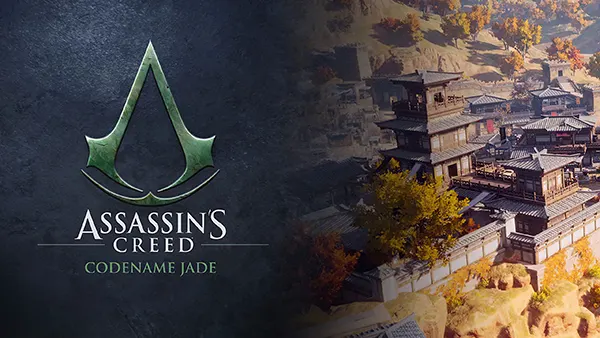
Assassin’s Creed Jade represents Ubisoft’s attempt to bring a fully-fledged open-world experience to mobile devices without reducing the scale or historical depth that defines the series. Set in Ancient China during the Qin dynasty, the game focuses on player-created characters rather than established protagonists, offering a different angle on the Assassin–Templar conflict. As of 2026, it stands out as one of the most technically ambitious mobile action RPGs, combining stealth, parkour, and exploration within a large, persistent world designed specifically for touchscreen gameplay.
Historical Setting and World Design
The game is set around 215 BCE, a period marked by the unification of China under Qin Shi Huang. This era provides a grounded historical backdrop, featuring real locations such as Xianyang and the early Great Wall. Ubisoft has paid attention to architectural styles, clothing, and environmental storytelling, ensuring that the world feels consistent with historical records rather than fictionalised interpretations.
Unlike earlier mobile entries in the franchise, Assassin’s Creed Jade does not rely on segmented levels. Instead, it offers a continuous open world where players can travel between regions without loading screens. Terrain varies from dense urban centres to rural landscapes, mountains, and rivers, encouraging exploration beyond mission objectives.
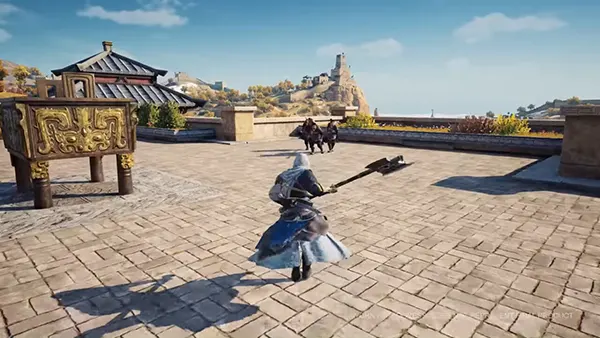
Environmental interaction also plays a key role. Players can climb structures, hide in vegetation, and use elevation to plan stealth approaches. The design mirrors the console versions but adapts movement sensitivity and camera control for mobile input, which significantly affects how players navigate vertical spaces.
Dynamic Exploration and Player Freedom
Freedom of movement is one of the defining features of Assassin’s Creed Jade. Players are not restricted to linear mission paths; instead, they can roam the map, discover side activities, and engage with dynamic events that occur organically within the world.
The game introduces a stamina-based traversal system that affects climbing and sprinting. This adds a layer of resource management, especially during long pursuits or infiltration sequences. It also encourages players to plan routes more carefully rather than relying on constant movement.
Hidden locations, collectibles, and environmental puzzles reward curiosity. These elements are not just filler content; they often provide crafting materials, lore fragments, or upgrades that directly impact progression, making exploration meaningful rather than optional.
Gameplay Mechanics and Combat System
Assassin’s Creed Jade retains the core gameplay pillars of the franchise: stealth, combat, and parkour. However, each system has been adjusted for mobile hardware. Combat is simplified in terms of controls but still requires timing, positioning, and awareness of enemy patterns.
The stealth system remains central. Players can perform silent takedowns, use distractions, and blend into crowds. Detection mechanics are responsive, meaning that careless movement or poor timing can quickly escalate into open combat situations.
Weapons and abilities are customisable. Players can choose between different combat styles, including fast dual blades or heavier weapons with slower attack speeds. Skill trees allow further specialisation, giving players control over how their character evolves over time.
Adaptation for Mobile Controls
Touchscreen controls have been carefully optimised. Virtual joysticks and gesture-based inputs allow players to perform complex actions such as climbing, dodging, and attacking without needing physical buttons. The interface remains minimal to avoid clutter during gameplay.
Auto-navigation features are available for players who prefer a more guided experience. However, manual control provides greater precision, especially during stealth missions where positioning is critical.
Performance optimisation is another important factor. The game offers adjustable graphics settings, allowing it to run on a wide range of devices while maintaining stable frame rates. This ensures accessibility without compromising visual quality for high-end users.
Monetisation, Progression, and Player Experience
As a free-to-play title, Assassin’s Creed Jade includes monetisation systems such as cosmetic items and progression boosts. However, Ubisoft has structured these elements to avoid direct pay-to-win mechanics, focusing instead on optional purchases that do not block core gameplay.
Progression is tied to missions, exploration, and character development. Players earn experience points, unlock new abilities, and upgrade equipment through regular gameplay rather than relying on microtransactions.
Daily activities and limited-time events provide additional incentives to return to the game. These systems are designed to maintain engagement without forcing players into repetitive tasks, which is a common issue in mobile titles.
Long-Term Engagement and Content Updates
Ubisoft has positioned Assassin’s Creed Jade as a long-term project with регулярні content updates. New regions, missions, and story arcs are expected to expand the world beyond its initial release state.
Seasonal events introduce временные challenges and rewards, keeping the gameplay loop fresh. These updates are particularly important for maintaining player interest in a competitive mobile market.
Community feedback also influences development. Adjustments to balance, controls, and progression systems have been implemented based on player responses during beta phases, which suggests an ongoing effort to refine the experience.