Android 17 for Mobile Gaming: New Foldable Mode, Fewer FPS Drops and Controller Remapping
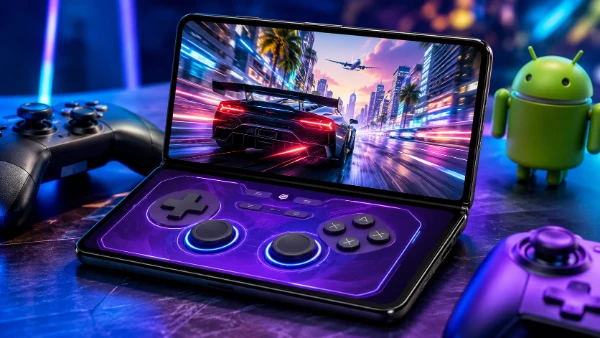
Android 17 brings several changes aimed directly at people who play games on their phones, rather than simply adding another collection of general system features. Google released Android 17 on 16 June 2026, beginning with Pixel devices and planning wider availability on eligible Android phones during 2026. For gaming, the most important changes are easier memory management during demanding sessions, native remapping for external controllers and a new gaming mode designed specifically for foldable phones. The latter uses the large inner display in a different way: instead of stretching a game and its touch controls across the entire screen, Android can divide the display into a game area and a separate virtual controller. Not every gaming feature arrived on every compatible device with the first Android 17 update, however, so availability still depends on the phone, manufacturer and individual Android 17 release.
What Android 17 Changes for Mobile Gaming
Android updates do not normally transform the raw graphics capability of an existing phone. A processor and graphics chip remain the same after an operating-system update, so Android 17 cannot suddenly make an older handset perform like a new gaming flagship. Google has instead concentrated on areas where the operating system can influence the experience. The company says it has made memory cleanup more efficient for high-definition gaming, with the aim of reducing frame drops and stutters. This matters because a demanding game does not operate in isolation: Android is also managing background applications, cached processes and other services while the game is running.
The practical difference should be most noticeable during longer or heavier gaming sessions rather than in a simple comparison of maximum frame-rate numbers. A phone capable of reaching 120 frames per second can still feel inconsistent when the frame rate suddenly falls for a moment. Short interruptions are particularly noticeable in racing games, competitive shooters, action titles and other games where timing affects control. By reducing interruptions associated with memory cleanup, Android 17 is intended to make frame delivery more consistent. That is a different goal from simply increasing peak FPS, and for many players it may have a greater effect on how smooth a game actually feels.
Android 17 also introduces app memory limits intended to prevent individual applications from consuming excessive amounts of RAM. Although this is a wider system change rather than a feature made only for games, it can help keep resources under better control when several applications have been opened before a gaming session. Players who regularly switch between a game, messaging apps, a browser and streaming services may benefit from more predictable memory behaviour. The result will still vary by device because phones differ significantly in RAM capacity, processor performance, cooling and manufacturer software, but Android 17 gives the operating system more ways to manage these competing demands.
Why Fewer Frame Drops Matter More Than Peak FPS
Frame rate is often treated as a single specification, but the average or maximum FPS figure tells only part of the story. A game that remains close to 60 FPS throughout a session can look and feel better than one that frequently reaches 90 or 120 FPS but drops sharply whenever the phone has to deal with another task. These sudden changes can create visible judder and make controls feel temporarily less responsive. Android 17’s memory changes are therefore relevant even to phones that already have powerful processors, because they address consistency rather than attempting to replace the work done by the graphics hardware.
Players should nevertheless keep realistic expectations. Android 17 cannot remove every cause of poor performance. A phone may reduce its processor speed when it becomes hot, and prolonged gaming can still lead to thermal throttling. A title with demanding graphics may also exceed what an older GPU can comfortably render at the selected resolution or quality setting. Bugs within a particular game can cause stuttering as well. The Android 17 changes deal with one part of the performance chain, so a poorly optimised game or a phone running close to its hardware limits will not automatically maintain a perfect frame rate after the update.
Network performance is another separate issue. In an online shooter, racing game or multiplayer RPG, a temporary connection problem can create delayed movement or input even when the game itself is rendering smoothly. Lower frame drops cannot improve weak Wi-Fi, high mobile-data latency or an overloaded game server. This distinction is useful when judging Android 17 after an update: smoother animation and fewer system-related pauses are reasonable improvements to look for, while faster servers or substantially higher graphics settings are not. The update is better understood as an attempt to make existing hardware behave more consistently during demanding play.
Foldable Gaming Mode Turns Half the Screen Into a Controller
The most distinctive gaming addition in Android 17 is Foldable Gaming Mode. Google has shown a 50:50 layout for compatible foldable devices in which the upper half of the inner display presents the game while the lower half becomes a dynamic virtual gamepad. Instead of putting touch buttons over the action, Android separates the picture and controls into their own areas. The idea suits book-style foldables particularly well because their unfolded screens are much larger and often squarer than conventional smartphone displays, which can make ordinary mobile-game interfaces feel stretched or leave controls positioned awkwardly near the edges.
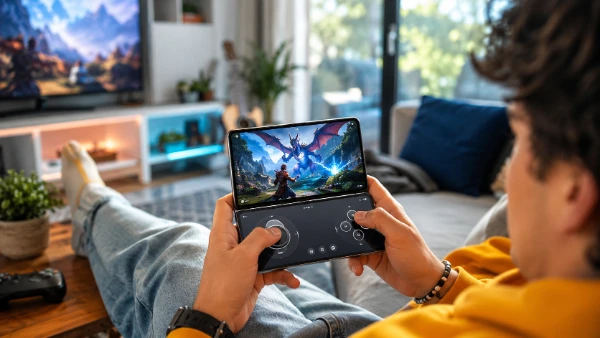
The virtual controller is designed to imitate the familiar arrangement of a physical gamepad, giving the player dedicated areas for directional controls, sticks and buttons without covering important parts of the game image. Google has demonstrated the concept with the foldable positioned partly open, creating a layout that is closer to a small handheld console than a conventional flat smartphone. This arrangement could be especially useful when travelling because it reduces the need to carry a separate Bluetooth controller. It also gives the player’s hands a defined control area instead of requiring repeated taps over the same screen that displays the action.
There is an important availability detail. When Android 17 was released in June 2026, Google said Foldable Gaming Mode was enabled in Android 17 but would become available in the following months. It was therefore not a feature that every foldable owner could immediately use simply by installing the initial stable update. That distinction remains important when considering an Android 17 phone specifically for this feature. Android versions reach devices on different schedules, and manufacturers may also distribute later Android 17 updates at different times. Owners should check the software available for their particular model rather than assuming that the new layout appears automatically after the first upgrade.
How the Foldable Layout Could Change Everyday Play
One of the strongest advantages of the split design is that the player’s fingers no longer need to cover the main game view. Standard touchscreen controls often occupy the lower corners of a display and can obscure objects, menus or other players. On a large foldable screen this can become particularly uncomfortable because the player must reach farther across the device while also supporting its weight. Keeping gameplay on one half and controls on the other creates a clearer division between viewing and input. It does reduce the physical size of the game image compared with using the whole unfolded panel, but the available area can still be considerably larger than a typical phone screen.
Google’s preview of Foldable Gaming Mode also shows that the virtual gamepad is intended to be customisable rather than fixed to one standard layout. Demonstrations have included options for adjusting elements such as button placement, size and other controller characteristics, making it possible to suit different hand positions and games. That flexibility matters because a comfortable configuration for a racing title may not suit an action game. It can also make the controls easier to reach for users who find the default placement uncomfortable. The exact set of options available to an individual owner can depend on the final release supplied to that device.
Game compatibility remains an important part of the equation. A system-level virtual gamepad is most useful when a title can understand controller-style input correctly. Games built entirely around direct touchscreen gestures may not suddenly behave like console games just because the phone can display virtual sticks and buttons. Developers also remain responsible for how their interfaces adapt to different screen shapes and orientations. Foldable Gaming Mode therefore solves a significant ergonomic problem, but it does not replace good game design. The best results are likely to come from titles that already work well with controller input and can adjust cleanly to the available display area.
Native Controller Remapping Brings More Control to Android Gaming
Android 17 also adds native controller remapping, addressing a long-standing inconvenience for players who use external gamepads. Controller support itself is not new to Android, but games and accessories have not always agreed on the same button layout. A player moving between different controller designs may find that the confirm, cancel or action buttons are located differently from the arrangement they are accustomed to. Until now, solving that problem could depend on settings provided by an individual game, software supplied with a particular accessory or third-party tools. Android 17 brings the adjustment into the operating system itself.
The new controls allow supported gamepad inputs to be reassigned, including common face buttons, triggers, stick clicks and directional inputs. Android 17 testing also demonstrated remapping for both wired and Bluetooth controllers, so the feature is not limited to one connection method. A player could, for example, change a button assignment to match the layout they already use on another gaming device instead of memorising a different arrangement every time they switch systems. Because the remapping is handled at system level, compatible games can receive the adjusted input without each title needing to provide an identical set of customisation options.
This is useful for comfort as well as personal preference. Some players find certain buttons easier to reach than others, while people with limited hand movement may need an arrangement different from the manufacturer’s default. Native remapping can make it easier to adapt a controller to those needs without relying entirely on a developer to include extensive accessibility settings in every game. It also reduces friction for players using phone clips, telescopic controllers or conventional console-style gamepads with an Android device. The value is simple: the controller can be adjusted around the player instead of forcing the player to adjust to one fixed layout.
What Players Should Check Before Upgrading for Gaming
The first thing to check is the update schedule for the specific phone. Google began the Android 17 rollout with Pixel devices on 16 June 2026, while eligible devices from other manufacturers are receiving the operating system according to their own release schedules during 2026. Having a phone capable of running Android 17 also does not mean that every related gaming feature will appear at exactly the same time. This is particularly relevant to Foldable Gaming Mode because Google separated its announcement from its wider availability. Anyone buying a foldable mainly for that feature should verify its current status on the exact model being considered.
Existing hardware remains just as important after the software update. Players looking for stable performance should still consider processor and GPU capability, available RAM, cooling, display refresh rate and battery behaviour. Android 17 can improve how system resources are handled, but it cannot compensate for hardware that is below a game’s requirements. The same applies to controllers: native remapping is a valuable addition, but the gamepad still needs to connect correctly and the game must accept suitable controller input. Keeping games and controller firmware updated can therefore remain important even after the phone itself has moved to Android 17.
For mobile gaming, Android 17 is notable because its main improvements address practical problems rather than relying on a headline claim about raw speed. More efficient memory cleanup is intended to reduce interruptions during demanding play, native controller remapping gives players more freedom over physical controls, and Foldable Gaming Mode introduces a new way to use the unusual shape of large folding displays. None of these changes guarantees higher FPS in every game, and the foldable feature is being distributed separately from the initial Android 17 release. Taken together, however, they show a clearer effort to make Android phones more comfortable and consistent gaming devices, especially for players who use foldables or external controllers regularly.