Arknights: Endfield vs Classic Arknights – What Has Really Changed?
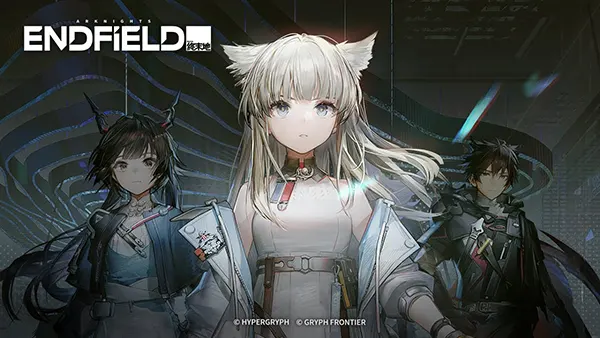
When Hypergryph first introduced Arknights in 2020, it quickly became one of the most respected mobile tower defence RPGs on the market. By 2026, the franchise has expanded significantly, with Arknights: Endfield representing a bold shift in design philosophy. While both titles share the same universe and thematic DNA, they are fundamentally different experiences. Endfield is not a sequel in the traditional sense; it is a large-scale reimagining that moves beyond grid-based tower defence into real-time 3D action RPG territory. Understanding these differences is essential for players deciding whether Endfield aligns with their expectations.
Core Gameplay: From Tactical Tower Defence to Real-Time Combat
The original Arknights is built around strategic, grid-based tower defence. Players deploy Operators onto fixed tiles, carefully managing deployment costs, skill timings and enemy routes. Success depends on planning, synergy and map awareness. Each stage is essentially a tactical puzzle, often requiring multiple attempts to optimise placement and timing.
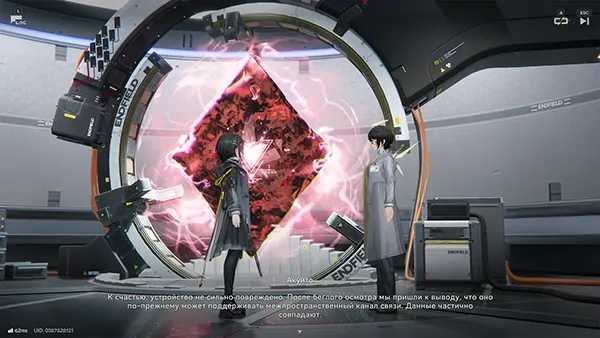
Arknights: Endfield, by contrast, shifts to a fully 3D real-time combat system. Instead of placing units on a grid, players directly control characters in open environments. Combat unfolds dynamically, with movement, positioning and manual skill activation playing a central role. The strategic layer still exists, but it is embedded within moment-to-moment action rather than abstract tile management.
This transition dramatically alters pacing. Classic Arknights rewards patience and foresight, while Endfield encourages responsiveness and mechanical skill. In practical terms, Endfield feels closer to modern action RPGs such as Genshin Impact or Honkai: Star Rail in structure, though it retains Arknights’ darker tone and tactical sensibility.
Combat Systems and Character Roles
In classic Arknights, Operators are divided into clear classes—Defenders, Snipers, Casters, Medics and so on—each tied to specific battlefield roles. Their function is largely positional. A Defender blocks lanes; a Sniper covers range; a Medic sustains the frontline. Interaction is indirect but highly strategic.
Endfield reinterprets these archetypes. Characters still fulfil distinct combat roles, yet they operate within a squad-based real-time system. Players can switch between team members, chain abilities and coordinate elemental or mechanical effects. Rather than passive lane control, combat revolves around active engagement, cooldown management and mobility.
Another notable difference lies in enemy interaction. In the original game, enemies follow predetermined paths. In Endfield, enemy behaviour is more fluid. They react to player positioning and environmental variables, making encounters less predictable and more dynamic.
World Design and Exploration
Classic Arknights presents its world primarily through story chapters, event maps and visual novel-style dialogue segments. Lore is extensive and politically layered, but exploration is menu-driven. The sense of place emerges from narrative writing, art direction and event design rather than free roaming.
Endfield expands the setting into explorable 3D environments. Players traverse industrial landscapes, frontier settlements and hostile territories within the Talos-II planet. Environmental storytelling becomes more prominent, with architectural design, terrain and interactive objects reinforcing the narrative.
This structural shift significantly changes immersion. Instead of reading about geopolitical tensions in Terra, players physically navigate regions shaped by them. The result is a more spatially grounded experience, though it also demands higher hardware capabilities, particularly on PC and next-generation mobile devices.
Technical Scope and Platform Focus
Arknights was originally designed for mobile devices, with later PC emulation and limited desktop optimisation. Its 2D engine ensures accessibility across mid-range smartphones, which contributed to its global popularity.
Endfield, however, is built with cross-platform ambitions from the outset. As of 2026, it targets PC and high-performance mobile hardware, with console discussions ongoing. The graphical fidelity—real-time lighting, detailed character models and expansive environments—marks a significant technical leap.
This evolution affects audience expectations. Endfield positions itself less as a lightweight mobile strategy title and more as a full-scale RPG that happens to support mobile play. Consequently, storage requirements, performance demands and update sizes are substantially larger than those of the original game.
Progression Systems and Narrative Structure
Progression in classic Arknights revolves around Operator recruitment via gacha mechanics, skill mastery upgrades, Elite promotions and base management. The base system—producing resources through facility optimisation—adds a layer of logistical strategy distinct from combat.
Endfield retains character progression and recruitment systems but restructures advancement around RPG conventions. Equipment systems, crafting mechanics and potentially open-area quest structures play a larger role. Rather than focusing on passive resource production in a base, Endfield emphasises exploration-driven materials and combat-derived rewards.
Narratively, both games maintain Arknights’ signature tone: morally complex factions, corporate power struggles and themes of discrimination linked to Oripathy. However, Endfield situates its story in a different timeline and location, reducing direct dependency on knowledge of Rhodes Island events. This makes it more accessible to newcomers while still rewarding long-term fans with familiar references.
Monetisation and Player Commitment in 2026
Classic Arknights has maintained a relatively player-friendly monetisation structure compared to many gacha titles, with transparent banners and predictable event cycles. Its design supports short daily sessions, making it sustainable for long-term engagement without excessive time pressure.
Endfield’s larger scope suggests a different engagement model. Real-time combat, exploration zones and potentially longer quest chains encourage extended play sessions. While gacha elements remain present, the overall time investment per session is expected to be closer to mainstream RPG standards.
For players in 2026, the choice between the two titles ultimately depends on preference. Those who value strategic precision and structured stages may prefer classic Arknights. Players seeking action-driven combat, immersive 3D environments and broader RPG mechanics are more likely to gravitate towards Endfield. Both games coexist within the same universe, yet they cater to distinctly different play styles.